

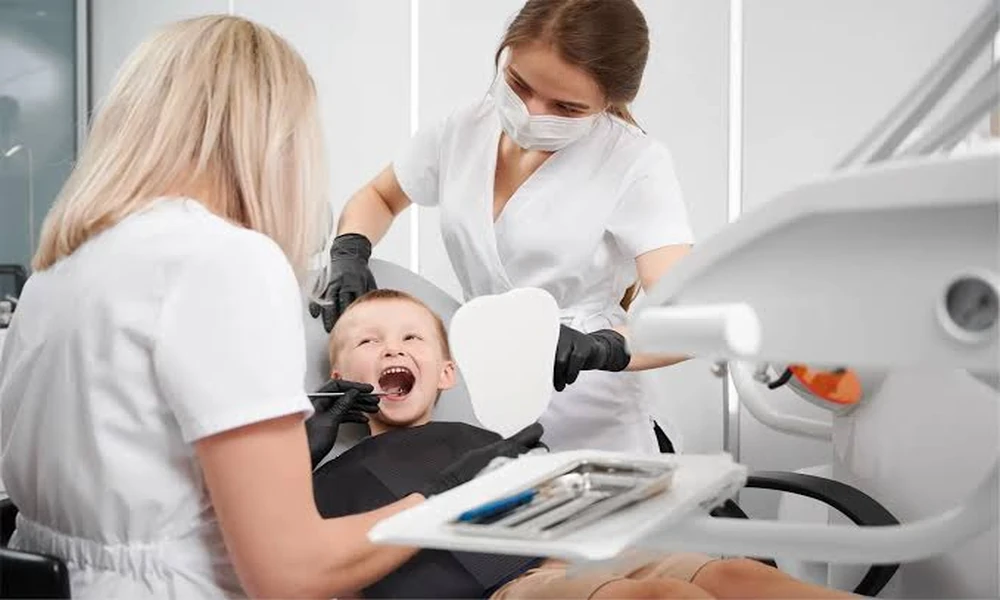
A cavity filled at twenty-five, braces reconsidered at thirty-five, an implant at fifty-five: dental needs shift over a lifetime, and the usual response is to switch providers each time a new kind of treatment comes up. A general dentist for cleanings, an orthodontist for braces, an oral surgeon for extractions, a separate implant specialist. Each referral means a new intake, a new file, and a new provider starting from scratch, often repeating questions and X-rays the last office already had on record.
Key Takeaways
- A patient’s dental needs typically shift across at least four or five categories over a lifetime: preventive, cosmetic, orthodontic, surgical and restorative care.
- A practice offering general, cosmetic, orthodontic, oral surgery and implant care under one roof keeps a patient’s full history in one place across all of them.
- Twenty-two distinct services across seven categories is a meaningful range for a single general practice to offer directly.
- The practical next step: ask a general dentist directly which procedures they handle in-house versus refer out, before assuming either way.
Why Does Switching Providers Actually Cost Something?
Every new provider starts without the context the last one built up: which fillings are old, which teeth have been sensitive, what a patient’s anxiety triggers are, what’s actually normal for that particular mouth. None of that transfers perfectly through a referral letter or a records request. A patient who has seen the same practice through a cavity, an orthodontic case and eventually an implant benefits from a provider who already has that full picture, rather than reconstructing it with every new referral and every new set of paperwork.
What Does “Integrated Care” Actually Include?
A practice offering general dentist in Kitchener services alongside cosmetic dentistry, orthodontics, oral surgery, endodontics and implant care, like Homer Watson Dental, covers a genuinely wide range without routing a patient elsewhere for most common procedures. That range matters most for patients whose needs change over time: someone who started with routine cleanings might eventually need a crown, then years later consider Invisalign, then eventually a dental implant. Handling all of that within one practice means one continuous record rather than several disconnected ones, and one team that already knows the full treatment history behind whatever comes next.
Where Do the Limits of “Under One Roof” Actually Sit?
Not every case belongs with a general dentist, even one offering a wide range of services. Complex orthodontic cases, certain surgical procedures, and specialized endodontic work sometimes still get referred to a specialist, and a transparent practice says so plainly rather than implying it handles absolutely everything in-house. Asking directly which procedures are handled internally versus referred out is a reasonable question for any patient considering a practice for long-term care, not a sign of distrust, and a straightforward answer is usually a good sign in itself.
How Should a Patient Actually Evaluate This?
A few questions help sort out whether a practice’s range of services is a genuine advantage or just a long list on a website:
- Which specific procedures are performed in-house versus referred elsewhere?
- How does the practice handle continuity when a referral is needed, does the file transfer smoothly?
- Is the same team involved across different treatment types, or does each service area operate separately?
- What happens if a treatment plan changes partway through, is that handled within the practice or restarted elsewhere?
- How far back does the practice’s own record-keeping go for a returning patient?
The last question is worth asking directly, since the real value of staying with one practice over time only shows up years later, when a new treatment plan can draw on a decade of history instead of starting from a blank chart.
Fewer Providers, More Context
The value of a practice covering multiple treatment categories isn’t that it replaces specialists when a case genuinely needs one. It’s that routine progression through a lifetime of dental needs, a filling here, a crown there, eventually an implant, doesn’t require rebuilding a patient’s history from scratch each time something new comes up.
Homer Watson Dental in Kitchener covers general, cosmetic, orthodontic, surgical and implant care from one practice, which keeps that history intact as a patient’s needs change over the years.