
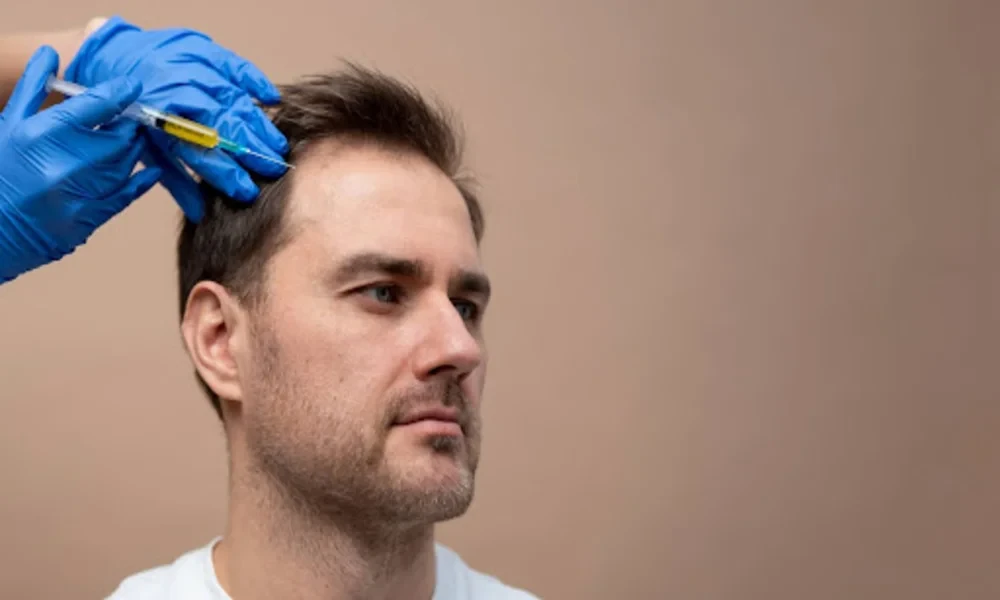

In regions plagued by hair loss, a hair transplant may provide a long-lasting improvement, although the results mostly rely on reasonable expectations. While surgeons must take into account a number of interrelated criteria, such as donor supply, existing hair, scalp features, future hair loss, and the size of the treatment region, patients often concentrate on getting the thickest feasible outcome. Patients may assess outcomes more realistically if they are aware of the distinction between density, coverage, and expansion.
Density Differs From Natural Hair Density
One of the most crucial ideas to grasp is that a person’s transplanted density may not always match their pre-hair loss density. Many follicles may be found in a comparatively tiny region of a natural scalp. Due to the scarcity of donor hair, it would not be feasible to replicate every lost follicle by transplantation.
Clinics may discuss graft numbers and density estimations with those looking into Hair transplants UK. These numbers should be taken into account in addition to personal traits. The appearance of dense transplanted hair may be influenced by follicular grouping, curl type, hair thickness, and colour contrast between the hair and scalp.
Strategic Distribution Is Needed For Coverage
The quantity of balding or thinning scalp that may be treated with accessible donor follicles is referred to as coverage. Donor hair may be sufficient to provide significant apparent fullness in someone with a rather minor receding hairline. It could be necessary to distribute the available grafts across a considerably wider region if a person has significant hair loss.
Because of this, setting priorities is a common part of transplant planning. Because they have a significant impact on look, the frontal hairline and facial framing regions may be given more attention. A different distribution plan could be needed for the crown, especially if donor resources need to be saved for potential future surgeries.
The Impact Of Graft Numbers On Financial Planning
Each patient may need a different amount of grafts. Treating severe thinning across the front, mid-scalp, and crown differs greatly from a little hairline correction. Because of this diversity, it is not always possible to understand hair transplant costs using a single conventional amount.
When evaluating a treatment plan, patients should consider more than just the total number of grafts. Relevant factors may include the intended location, donor care, operation method, surgeon expertise, and long-term plan. If follicles are dispersed without taking future hair loss or natural growth patterns into account, a higher graft count is not always preferable.
Growth Occurs Gradually
The complete aesthetic outcome of hair transplantation does not appear right away. Transplanted hairs may shed in the early stages when the follicles are still under the skin. As a result, the treated region may initially resemble its pre-procedure appearance.
In most cases, new growth grows gradually rather than all at once. Before growing more developed, early hairs may look thin or fine at first. The overall look may progressively become fuller as more transplanted follicles begin their growth cycles. Patience is crucial when assessing the outcome since different follicles may mature on different dates.
Careful Evaluation Should Not Be Replaced By Location
Particularly when thinking about hair transplants London and other places with plenty of clinics, some people compare providers based on where they live. Convenience, travel needs, follow-up visits, and total costs may all be impacted by location, but it shouldn’t be the only factor taken into account.
Examining a clinic’s methods for hairline design, donor preservation, graft management, aftercare, and long-term planning might help patients. Instead of relying just on before and after photos from patients with various hair qualities, consultation offers a chance to talk about what amount of covering is really possible.
Current Hair Modifies The Visual Effect
The patient’s remaining natural hair does not exist apart from the transplanted follicles. The look of fullness may be greatly influenced by existing strands. Therefore, the objectives of a patient with widespread thinning may vary from those of a patient with a fully bald treatment region.
It is also important if non-transplanted hair is lost in the future. An initially balanced outcome may gradually take on a different appearance if the surrounding natural hair continues to diminish. Because of this potential, surgeons often take expected progression into account when deciding where and how densely to implant grafts.
Setting Expectations For The Outcome
Redistributing available follicles rather than replacing every lost hair strand is the ideal way to conceptualise hair transplantation. The ultimate look is influenced by density, coverage, growth time, donor availability, and potential hair loss. Patients who are aware of these variables are in a better position to talk to their surgeon about realistic objectives and evaluate their progress over the right period of time.
