

You cleaned a small cut, put a dressing on it and got on with your day. The next morning it’s time to change it, and the adhesive tugs at your skin while the pad seems glued to the wound.
It’s a common problem, and it’s worse if you have sensitive skin or need to change a dressing regularly.
How you take off the old dressing, clean the area and put on a new one affects how your skin feels afterward. A few simple habits make the whole thing much easier.
Clean hands and the right supplies
Wash your hands well with soap and water before you touch the wound. Pick a clean, well-lit spot and have everything within reach before you start.
For a minor cut or scrape, that usually means clean gauze, water or sterile saline, a fresh dressing and a small bag for the used materials. Check that the new dressing’s packaging isn’t damaged before you open it.
The type of dressing matters too. A plain adhesive bandage may be fine for a small cut, but other injuries can need something more specialized. If a doctor or nurse has recommended a particular product, stick with it rather than switching on your own.
For routine minor cuts, change an ordinary bandage at least once a day, and sooner if it gets wet or dirty. Specialized dressings may come with different instructions.
Taking off the old dressing
This is usually the part that hurts. Don’t rip the adhesive off. Start at one corner, hold the skin next to it with your other hand, and peel the adhesive back slowly, keeping it low and close to the skin.
If the pad is stuck to the wound, don’t pull it. Check the product’s removal instructions first. Soaking the dressing with warm water, in the shower for example, can loosen some dressings, but not every specialized dressing should come off the same way.
If you have fragile skin, a gentler adhesive or a medical adhesive remover can help. Talk to a healthcare professional if ordinary dressings keep leaving your skin red or damaged. Once the old dressing is off, throw it away and wash your hands again.
Cleaning without scrubbing
For an uncomplicated minor cut, rinse the wound gently under clean running water. You can use a mild soap to clean dirt off the skin around it.
Don’t scrub the wound or keep touching it. Skip rubbing alcohol and hydrogen peroxide for routine cleaning, since both can irritate the wound and slow healing.
Pat the surrounding skin dry with clean gauze instead of rubbing it with a towel. Then take a good look at the wound before you cover it again. Increasing redness, swelling, worsening pain, pus or a bad smell can mean it needs medical attention.
Deep wounds, serious burns and cuts that won’t stop bleeding need to be seen by a healthcare professional, not managed with dressing changes at home.
Choosing the right dressing
Different wounds need different coverage. A small, shallow cut may only need a sterile bandage, while other injuries need a dressing chosen for where the wound is, what condition it’s in and how much fluid it produces.
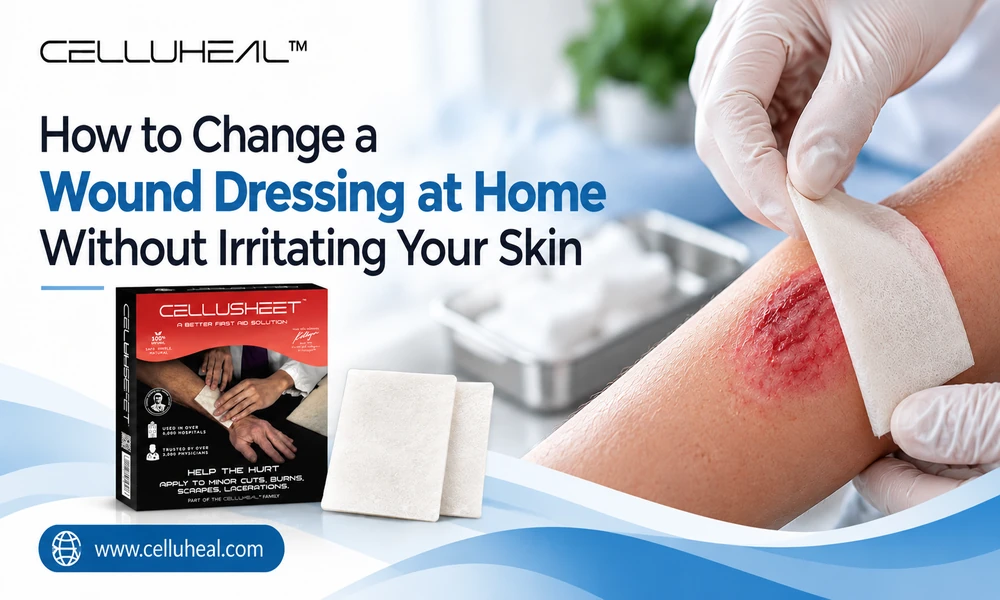
For suitable minor wounds, a collagen dressing is another option. Cellusheet™ Collagen Sheet from CelluHeal™ is made with 100% non-hydrolyzed Type I bovine collagen and is available over the counter. It is intended for minor cuts, scrapes, abrasions, lacerations and minor burns.
Following the product directions, cleanse the wound first, place the Cellusheet directly on the wound and cover it with an appropriate secondary dressing. Replace the cover if it becomes wet or dirty, or follow the advice of a healthcare professional.
Cellusheet should not be used by people with a known allergy to bovine-derived products and is not intended for infected wounds. For deep, infected, chronic or serious wounds, seek professional medical advice.
Whatever dressing you use, follow its own instructions because different products may have different application and removal requirements.
Look after the skin around the wound
Sometimes the wound looks better while the skin around it gets more and more sore. Pulling off adhesive again and again, too much moisture and friction can all leave that skin red and irritated. When you put a new dressing on, lay the adhesive border down without stretching it tight across the skin.
If adhesive bandages keep bothering you, a nonadhesive pad held in place with paper tape may work for some minor wounds. Keep the surrounding skin clean, and don’t put unfamiliar creams under a dressing. Some can stop the adhesive from sticking or irritate the skin further.
If you get a rash, blisters or redness that won’t go away, stop using whatever is causing it and ask a healthcare professional for advice.
A routine that doesn’t hurt
A dressing change is your chance to check on the wound and give it a clean cover. It shouldn’t be one more thing that hurts.
And if the wound gets more painful, shows signs of infection or just isn’t getting better, see a doctor rather than carrying on with dressing changes at home.
References
Cleveland Clinic: How to Clean a Wound at Home and When to Seek Medical Care