
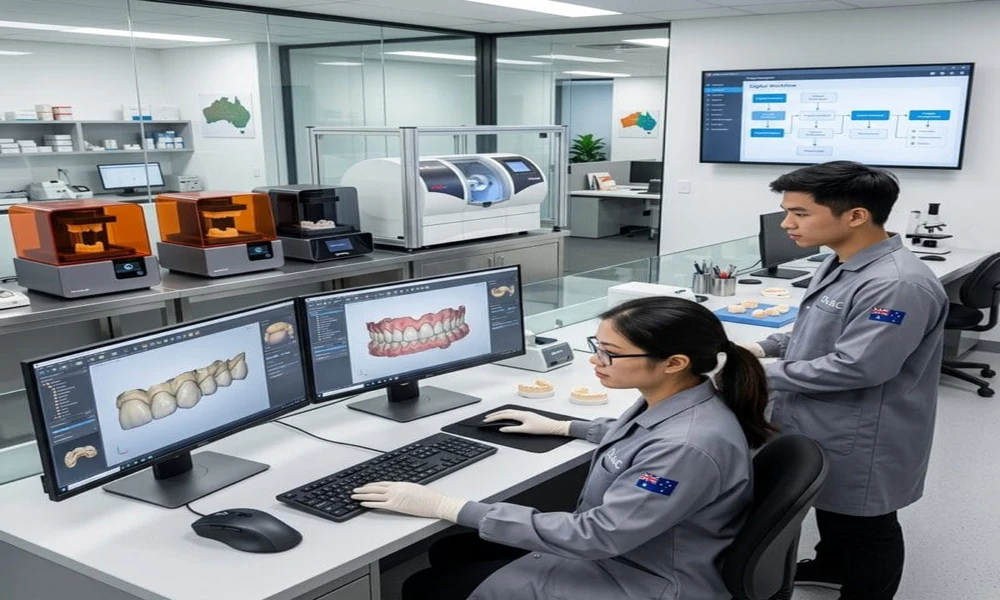

Walk into a modern dental office today and you might spot something that looks more like a small desktop printer than dental equipment. Increasingly, that’s exactly what it is. 3D printing has moved from an industrial novelty into a routine part of how dental models, surgical guides, and even some appliances are made.
The appeal is straightforward. Traditional plaster models took time to pour, dry, and store, and physical models could warp or break. A 3D-printed model is created directly from a digital scan of your mouth, layer by layer, in a matter of hours. The result is a physical model that matches the digital file exactly, useful for everything from checking how a new retainer fits to planning where a dental implant should go.
Surgical guides are one of the more meaningful applications. For implant placement, a guide printed from a CT scan and a digital design tells the surgeon exactly where to drill, at what angle and depth, based on planning done in advance rather than judgment calls made mid-procedure. That kind of precision genuinely reduces surprises and, often, complications.
Aligner therapy has been transformed the same way. Instead of hand-trimmed plastic, each stage of tooth movement can be printed from a 3D model generated by software that plans the entire treatment sequence up front.
None of this happens without design work behind the scenes. Someone still has to take the raw scan data and turn it into a file a printer can actually use, checking that a model will print cleanly, that a guide’s sleeves align with the implant plan, that tolerances are realistic. Clinics increasingly lean on dedicated 3d dental design partners for exactly this step, since it requires specialized software skills most dental offices don’t need to keep in-house full time.
For patients, the practical upshot is fewer visits, better-fitting appliances, and procedures planned with more precision than eyeballing ever allowed. It’s not flashy, but it’s one of the more consequential shifts in dentistry in the last decade.
As the equipment becomes more affordable and design software keeps improving, expect 3D printing to show up in even more corners of everyday dental care over the next few years.
The Rise of 3D Printing in Modern Dental Care
