

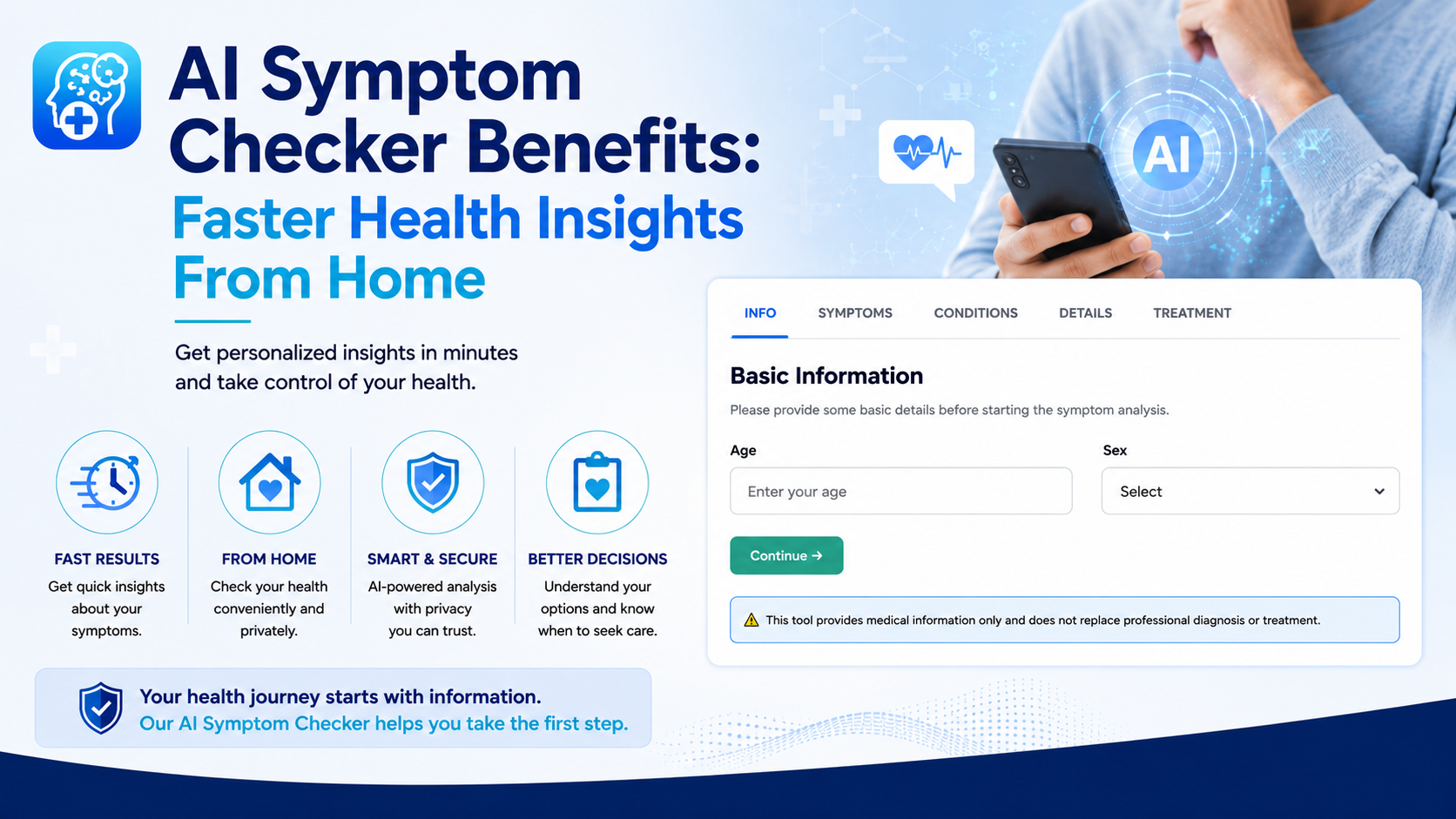
A sudden rash, an unexplained ache, or a lingering cough can ruin your day. Often, these symptoms strike when your primary care doctor is unavailable. In the past, you might have spent hours scrolling through medical forums or search engine results. This often leads to more confusion and unnecessary anxiety. Today, AI symptom checkers offer a clearer path. These tools provide instant feedback based on your specific inputs. They help you understand your health better without leaving your house.
Navigating health worries is difficult, especially when you are unsure if your symptoms require an emergency room visit or just a day of rest. AI-powered platforms fill this gap by acting as a first point of contact. They process large sets of medical data to suggest potential causes for your discomfort. While these tools do not replace a doctor, they offer a smart, fast way to evaluate your situation.
Understanding How AI Symptom Checkers Work
An AI symptom checker is an online platform that collects data from individuals about their symptoms via questions. The information collected is analyzed using AI algorithms and databases. The main advantage of AI symptom checkers is their speed.
These tools rely on sophisticated algorithms to interpret your health information. Think of them as a digital filter for medical data. When you enter your symptoms, the AI searches its database for patterns. It looks for how specific symptoms often group in known medical conditions.
The process is straightforward for the user. You typically answer a series of questions about your symptoms, including their duration, intensity, and location. You might also provide context, such as your age, gender, or known medical history. The AI takes this data and runs it against millions of clinical cases.
Gaining Quicker Preliminary Health Assessments
Waiting for a doctor’s appointment can be frustrating when you feel unwell. One of the biggest benefits of an AI symptom checker is the speed at which it provides information. You can get a symptom analysis report in minutes, any time of day or night. This prevents you from spending hours searching for answers that might not apply to your specific situation. You get instant, structured feedback that makes sense of your symptoms right away.
Enhancing Access to Healthcare Information
Geographical and time barriers often make it hard to see a doctor. If you live in a rural area or work odd hours, getting an initial medical opinion is difficult. AI symptom checkers provide
a solution by being available 24/7. They help people in remote locations or those with limited mobility get an assessment without traveling long distances.
Cost is another factor. A doctor’s visit for every minor health concern is expensive and not always possible. These digital healthcare tools offer a low-cost, or sometimes free, way to screen your symptoms. You can decide if your situation truly needs a paid consultation or if home care is sufficient.
In regions where doctors are scarce, these tools are essential. They act as a basic triage system, helping people determine the severity of their needs. If the tool detects a high risk, the person knows they must find a way to get to a clinic.
Making Informed Decisions About Next Steps
The primary goal of these smart tools is to help you make the right decision. The output should clearly suggest whether you can manage your symptoms at home, see a pharmacist, or schedule an appointment with your doctor. In cases of emergencies, the AI will direct you to visit an emergency room or a nearby clinic. This triage function is one of the most practical benefits of the technology.
You can also use the insights from the symptom checker to prepare for your next doctor’s appointment. Write down the potential causes the tool suggested and the specific questions it generated. When you arrive at the clinic, share this information with your provider. This helps you have a more focused and productive discussion.
The Future of AI in Personal Health Monitoring
The potential for this technology continues to grow. Soon, these symptom checkers will integrate directly with wearable devices. Imagine your smartwatch tracking your heart rate, sleep quality, and blood oxygen levels throughout the day. The AI could use this data to spot trends and offer insights before you even feel a symptom.
Many medical professionals see these tools as partners in care. They view AI as a way to engage patients in their own health and manage minor issues more efficiently. The goal is to create a healthcare approach that is continuous, connected, and focused on the individual’s long-term well-being.
Empowerment in Your Health Journey
AI symptom checkers are transforming how we look at our own health. They provide speed, access, and clarity when we need it the most. Follow Medipedia to learn how these tools offer preliminary information to help you make informed decisions about when to rest and when to seek medical help. These tools do not take the place of a doctor, but they serve as valuable guides in your daily life. By combining technology with good judgment, you can manage your health with more confidence.