
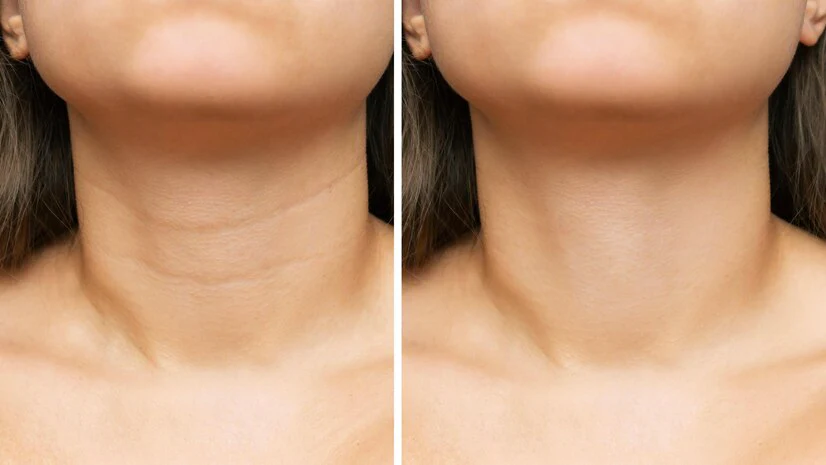

Neck skin is thin and moves all day. We look down at phones and screens. Sun and time add to the strain. Water loss and less collagen make lines show sooner. Some people also sleep on one side, which can crease the neck.
Daily Habits That Help
Good habits slow new lines from forming. Clean your neck when you wash your face. Use a light moisturiser morning and night. Pick one with humectants that draw in water. Always use broad-spectrum sunscreen on the neck. Reapply when you stay outside for long. A soft scarf can shield skin from harsh sun. Try to hold your phone at eye level more often.
Simple At-Home Care
Gentle care helps skin look calm and fresh. A mild chemical exfoliant can smooth rough spots. Use it once or twice each week. Follow with a plain, hydrating cream. Some see gains from a low strength retinoid. Start slow to limit sting and flake. Patch test first if you have sensitive skin. Small steps add up over months of use.
In-Clinic Options To Consider
Clinic care can address deeper lines and texture. Muscle relaxer injections can ease tight bands. The neck can then lie flatter at rest. Soft gel fillers can add support in fine lines. A skilled hand keeps results soft and real. Microneedling makes tiny channels that prompt repair. Some clinics add gentle heat for extra lift. Light laser passes may smooth rough tone and marks. These routes can work in a plan or alone.
What Results Look Like And When
Most people want smooth skin that still looks natural. That goal is fair with a clear plan. A single visit can show a fast change. Full gains often need a short series. The neck heals slower than the face. Expect the skin to improve over weeks, not days. Results last longer when you keep up home care. You can then space out future visits.
Safety And Sensible Care
Choose a trained professional who treats neck skin often. Share your health history and any skin issues. Ask what to expect before, during, and after. Mild swelling or small bruises are common and fade. Keep the area clean and avoid heavy rubbing. Skip hard workouts for a day if advised. Sleep with your head raised the first night. Follow the aftercare plan you are given.
Cost And Value
Costs vary by clinic, method, and number of sessions. Some plans mix tools for a balanced effect. A clear quote and timeline help you plan well. Ask how long results may last for each step. Good care pairs a fair price with safe methods.
Who Might Not Be A Match
Some people should delay treatment for a while. If you have an active skin rash, wait until it clears. If you are pregnant or nursing, seek advice first. People on blood thinners may bruise more. Deep bands from strong muscles may need staged care. A careful review helps match the plan to your needs.
Setting Realistic Hopes
Neck skin works hard all day, every day. No single step can erase years at once. A steady plan can still make a clear change. You can smooth lines, boost glow, and refine shape. Keep your goals clear and your care steady. Take before photos to track small wins over time.
How To Choose Your Path
Begin with a simple review of your daily habits. Add sunscreen and gentle moisture if you do not use them. Give that routine eight to twelve weeks. If lines still bother you, seek a consult. Ask for a plan that fits your budget and time. Make sure it includes home care to keep gains.
The Role Of Neck Lines Treatment In A Plan
Neck lines treatment works best as part of a routine. Pair clinic steps with smart daily care at home. Keep your neck safe from sun, heat, and harsh scrubs. Stay well hydrated and sleep on a soft, clean pillow. Small changes help your results last longer. When needed, return for light touch ups.
Final Thoughts
A smooth, firm neck boosts the look of your whole profile. You do not need harsh steps to see gains. Start with simple care and protect your skin each day. Add clinic methods when you are ready. With a clear plan, neck lines treatment can be safe and effective. Keep your goals realistic and your routine steady. Your neck can look fresher, softer, and more refined.
